
World Series of Poker (WSOP)
There is a distinctive thrill in every turn of the cards, every carefully calculated bet, and every tense pause before a player reveals a winning hand. Nowhere is this atmosphere more intense than at the World Series of Poker (WSOP), widely regarded as the most prestigious poker tournament in the world. The series brings together experienced professionals, ambitious newcomers, and passionate fans who follow each stage of the competition with close attention. Beyond the large prize pools, the WSOP is valued for its demanding structure, diverse tournament formats, and the level of skill required to succeed against strong international opposition. Every event combines mathematics, psychology, patience, and disciplined decision-making, making the series not only a contest for major titles but also a defining test of a player’s consistency and strategic judgement. Its history, traditions, and global recognition have helped shape modern competitive poker and continue to attract participants from many countries each year.
Where Are They Held and How Often?
Initiated in 1970, the WSOP was the brainchild of Benny Binion, held at the Horseshoe Casino in Las Vegas. It started as a small gathering of seven poker aficionados but has since burgeoned into an international spectacle. Currently, the annual event takes place at the Rio All-Suite Hotel & Casino in Las Vegas, drawing thousands of entrants from across the globe. Over the years, it has expanded with satellite events worldwide, cementing its reputation as the definitive poker championship.
Biggest Win in a Poker Tournament
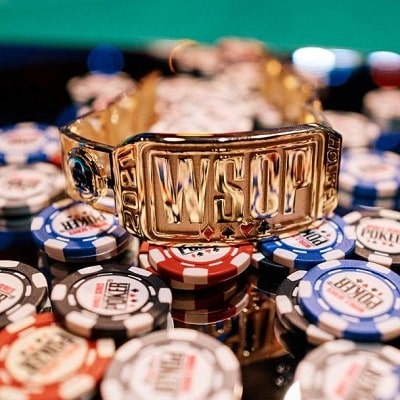
While individual players have achieved many remarkable results at the WSOP, the Main Event champion’s prize remains one of the most closely watched awards in poker. In 2006, Jamie Gold defeated a field of 8,773 entrants and received $12 million, which was the largest first-place payout in Main Event history at the time. That record was surpassed in 2023, when Daniel Weinman won $12.1 million after overcoming 10,043 entries. However, the significance of a WSOP victory extends far beyond the prize money. Each event winner receives an official gold bracelet, a trophy that represents success at one of the highest levels of competitive poker and becomes a permanent part of the player’s tournament record. The Main Event bracelet carries particular symbolic value because it identifies its owner as poker’s world champion for that year. Alongside the major live series, online poker tournaments are also available in regulated jurisdictions, with formats ranging from low-cost events and satellite qualifiers to larger multi-table competitions. Entry conditions vary by operator and location, but players generally need to create an account, verify their identity, meet the legal age requirement, and pay the stated buy-in before taking part.

Who Are the Top Three WSOP Players?
Numerous poker giants have graced the WSOP tables, but few shine as brightly as:
- Phil Hellmuth: Known as the “Poker Brat” for his fiery temperament, Hellmuth holds the record for the most WSOP bracelets, with 15 to his name.
- Doyle Brunson: A true poker legend, Brunson has 10 WSOP bracelets and remains one of the game’s most respected figures.
- Johnny Chan: Tied with Brunson, Chan also boasts 10 bracelets and is remembered for his back-to-back Main Event victories in 1987 and 1988.
Can a Beginner Take Part?
The WSOP’s beauty lies in its inclusivity. While the competition is fierce, anyone can enter. All it requires is the entry fee for the desired event and the ambition to compete. Satellite tournaments, both online and offline, offer cheaper routes to earn a WSOP seat. Many champions, including the famed Chris Moneymaker in 2003, began their journey through such satellites. The WSOP is, at its heart, a testament to the game’s democratic nature, where skill triumphs and even novices can become legends.
Conclusion
The World Series of Poker is not merely a tournament but a major celebration of a game enjoyed by millions of people around the world. Its events bring together established professionals, experienced amateurs, and newcomers who want to test their skills in a structured and highly competitive environment. Beginners can also pursue tournament experience by starting with smaller live or online competitions, studying poker rules, practising responsible bankroll management, and gradually adapting to the strategic demands of longer events. From its modest beginnings in Las Vegas to its present international status, the WSOP reflects poker’s enduring appeal and its unique combination of mathematics, psychology, patience, and disciplined decision-making. Success is never guaranteed, as every participant must deal with strong opponents, changing table dynamics, and the natural variance of the game. Whether a player is an accomplished professional or an ambitious amateur, the WSOP remains a respected setting in which preparation, consistency, and sound judgement can lead to memorable achievements and recognition within the poker community.